
Tailored Print Design Solutions: Creating Visual Impact That Actually Works
Tailored Print Design Solutions, It was the time when I enjoyed the first realization of the difference between the generic and tailored print design. One day we had a local bakery owner in our studio and she had a stack of business cards that she had ordered through a low-cost online company. They were okay, not spectacular but there were the ones that I had heard too many times that very month, just a template. Six weeks the next our custom design of hand-illustrated bread loaves and color scheme inspired by the recipes of her grandmother turned out to be a subject of conversation in her cards. Customers kept them. They asked about them. It is at this point that print design ceases to be a commodity and a real business asset.
What is customized about Print Design?
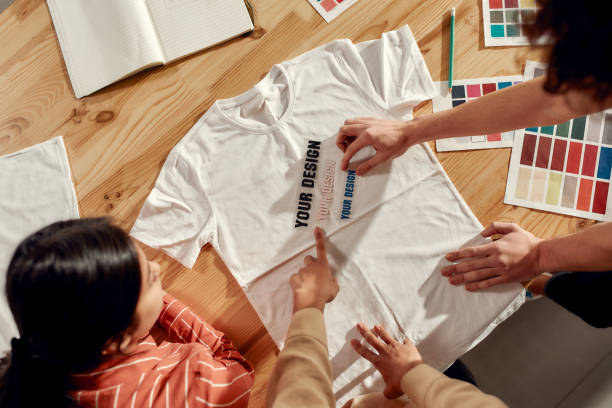
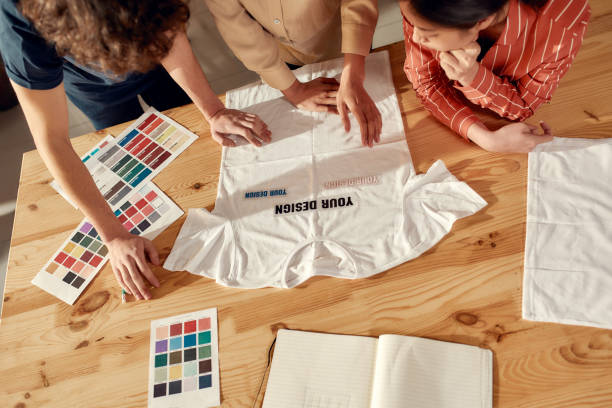
We should demystify the concept of tailored print design though the phrase is used carelessly. It is not merely sticking your logo on a template or picking your brand colors out of a drop-down button menu. Real custom print solutions entail knowing the context within which the materials are going to be applied, the people that are to receive the materials, and what you want done by those who shall receive the materials.
Think of it like clothing. Ready-made suits can be effective, yet a fitted suit fits perfectly to you, considering your posture, and also represents your own style. The same applies to custom print design it is cut to your individual brand size.
It involves the things that most individuals do not use as a guide: the thickness and feel of paper stock, how colors change with various light source situations, whether the materials used can stand outside and how a brochure can feel in the hands of a person. These touch points shape perception more than most owners of businesses are aware.
Business Case of Custom Print Materials.
This is what I have seen in this profession during the fifteen years that I have worked in the field. Companies which make investments in unified, professionally crafted print materials have recorded greater recognition of their brands, enhanced customer feeling of quality, and are in many cases better tolerant of price rises by their market. A 2023 study by the Printing Industries of America established that a direct mail with custom design elements increased the response rate of a campaign by 30% compared to the generic one.
A manufacturing client changed to custom-made catalogs with considerate typography, professional photography involvement and sensible information structure. Their sales force indicated that the prospects were taking significantly more time to go through materials at meetings. In the first quarter, the investment was recovered.
Design Principles of Successful Custom Print Design.
The choice of font does not speak but acts. A law office with playful rounded types sends wrong messages. An entertainment company working with children that applies corporate fonts without being emotional is losing out on the emotional connection. Custom print design aligns typographic personality to brand personality and guarantees readable convenience in the variable size of prints and distances of viewing.
Intentional Application of Colour.
The color theory is critical in print. Contrary to screens, the printed colors rely on the mixture of ink, the characteristics of the paper, and the finishing. A talented print designer knows the way of colors playing physically- not only digitally. They are aware that the bright orange on your screen may not look so bright on plain paper and they go ahead to fix it.
Intentional Place Constructing.
Anything on a printed page must be worth its space. Custom print design separates the information into a hierarchical frame and directs the eye of the viewer to the main message to the supporting information to the call-to-action. White space is not a wastage, but breathing space ensuring that the subject will not overpower the eye (and highlight important information).
Selecting the Appropriate Print Designing Company.
When you are in need of a person who truly provides customized solutions, you have to pose the correct questions. Do they begin with a discovery process concerning your business, audience and goals? Why do they suggest some of the paper stocks or binding? Have they worked in your industry or with other similar problems?
Red flags: any designer who instantly switches to presentation templates, one who does not inquire about what distribution channels you have, or one who just appears out of place when asking about the finer details of print production, is not to be trusted. An experienced print designer realizes that his or her work of creative thinking should be transferred to the material world flawlessly.
Typical Customized print applications.
The range of personalized print materials covers all the business requirements virtually:
- Brand Identity Collateral refers to business cards, letterheads and envelopes that ensure consistency and can fit various applications.
- Marketing Materials include: brochures, flyers, catalogs and postcards that are tailored to specific campaigns, audience or distribution mediums.
- Packaging Design to safeguard goods besides conveying brand values and fulfilling regulatory demands.
- Event Materials such as programs, signage, name badges and the promotional items were all coherent visual language.
- Internal Communication such as training manuals, employee handbooks and recognition certificates which promote the company culture.
Sustainability Considerations
The contemporary customized print design is engaged in embracing environmental responsibility. This entails the specification of recycled or sustainably sourced papers, soy or vegetable based ink recommendation, and the creation of pieces that produce minimal waste in the production process. My clients now even order designs that are optimized to standard sheet sizes with a specific purpose of minimising the amount of waste in paper trims.
The Investment Perspective
Quality custom print design is not cheap, but comparing it with its initial cost is not the point. Take into account cost-per-impression, throughout the existence of the material. A business card with the right design will take pennies per touch in two years. One that is not well structured, resulting in its being discarded immediately, is much more expensive in terms of lost opportunities.
Frequently Asked Questions
Average turnaround time of custom print design?
The average time spent on most projects is 2-6 weeks based on the complexity, progression of the revision, and production needs. Rush timelines can be undertaken although quality or cost can be compromised.
What is the distinction between print design and digital design?
Print design involves the knowledge of physical processes of production, ink control to create output in terms of colors, paper characteristics, and the performance of materials under real-life situations.
Should I outsource another printer once I have designed?
Not necessarily. Print production relationships are administered by many design studios that make sure that design specifications can be translated to complete works.
How big of a budget do I need on professional print design?
Allow $500- 5,000 on typical projects such as business card suites, or brochures. More complex projects such as catalogs or full-scale brand systems are more expensive.
Is it possible to use existing elements of the brand in new print materials?
Absolutely. Professional designers operate using pre-developed brand parameters and maximize material to use in certain print applications.
What will be the files I will get upon completion of the project?
You are supposed to get print-ready PDF and original source files which will allow you some flexibility in case of future changes or reprinting.