Printing for Marketing Materials: A Comprehensive Guide to Making Your Brand Stand Out
Printing for Marketing Materials, I recall the first marketing campaign that I was working on in 2008. Our digital designs had taken weeks to be completed and when the brochures were finally printed, we were presented with boxes of printed brochures that were not what we had imagined at all. The colors were not right, the paper was not expensive and frankly speaking it was humiliating to distribute them during the trade show. That was a very bitter lesson that has taught me all I know about print marketing- and believe me, the details do count more than most of the people know.
The reason why print marketing does not disappear in 2024.

This is one thing that will shock you because, regardless of the current digital era, printed marketing materials are still producing amazing outcomes. According to a study conducted by the Data & Marketing Association, direct mail has a response rate of 5-9% on average as compared to email which has a pathetic 1% average. It feels good to have a brochure or business card that has been designed properly and cannot be duplicated through digital means.
I have dealt with so many small business owners who at first neglected to consider print as an old school. However, when they finally had the money to buy good materials they realized something interesting, the customers did not dispose of their printed work, they tacked business cards to cork boards, and would actually read through catalogs. Physical marketing brings out a sense of touch, a sense of taste, which a few seconds Instagram ad cannot create brand recognition.
Knowledge of Paper Stock and weight.
Now we will get into the practical stuff as this is the area that most people fail.
Paper weight is determined in pounds (lb) or grams/square meter (gsm), and your choice will or will not make your materials. In the case of business cards, I do not suggest less than 14pt (approximately 350gsm) heavy. Get any thinner and you have a card that is flimsy, like you are cutting corners. 16pt or 18pt premium cards present quality without uttering a word.
Flyers and brochures are a good idea when using 100lb gloss or 80lb matte, based on the brand image you have. Menus of restaurants must be durable hence 100lb gloss that is laminated should perfectly resist spills and daily handling.
The finish matters too. Slick finishes are colorful and they are excellent to use in product photography. Matte finishes are elegant and less glare-inducing- ideal on text-heavy works or brands that are high end. Soft-touch lamination? That silky feel is pure high-end, but it creates an unnecessary expense.
Color Issues: CMYK and RGB.

Even expert designers are brought to a stop by this. Colors in your computer monitor are in RGB ( Red, Green, and Blue ), whereas in printers that are sold commercially they are in CMYK ( Cyan, Magenta, Yellow and Black ). that beautiful neon orange that you had made? It could be muddy rust colored.
You should always translate your files to CMYK then send them to print and demand some physical proof in case color accuracy is very important. I also learned this one through the hardest way possible when one of the clients got a signature color of turquoise as a boring teal, not that fun explaining that one.
In case of brands that have exact color needs, use Pantone matching (also referred to as spot colors). It is more expensive, but when your brand color simply cannot be different in all printed materials, it will be worth it.
Examples of Marketing Materials to invest in.
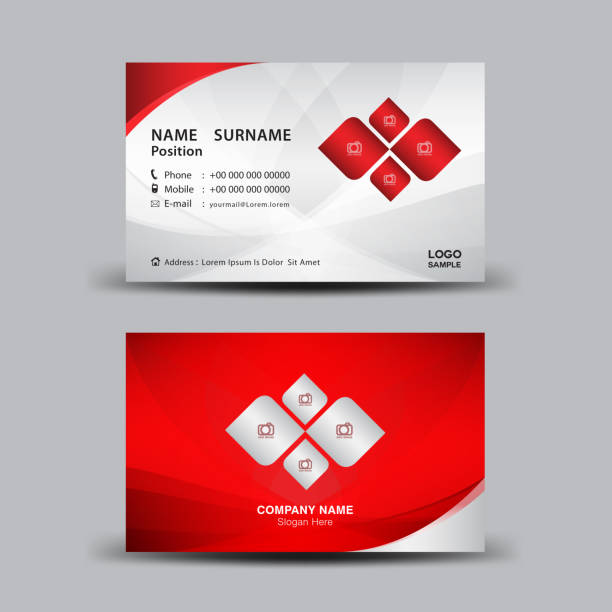
Business Cards are still fundamental networking instruments. People were exchanging cards even though it was predicted that they would die, I have never been to a conference where that was not happening. Use special shapes, letterpress printing and foil stamping to be different.
Complex services or products should be advertised using brochures because they are a brilliant tool to use. Tri-fold is popular, however, not to be neglected: there are also gatefold and z-fold.
Postcards and Flyers are relatively cheap means of promotion and events. They can be used to great effect in direct mail to particular neighbourhoods.
Foot traffic and attendance at the event are caused by Banners and Signage. Use good materials – low-priced banners with wavy ends look bad on you.
Booklets and Catalogs are useful in displaying large product lines. I have witnessed professionally prepared catalogs that have boosted average order values by 20 or more percentages because shoppers have found something new that they were not aware of.
Selecting an Adequate Printing Company.
Printers are not made the same way. Vistaprint or PrintingForLess are online print companies that are competitive with regular print jobs, however, local print shops have something that cannot be found anywhere: experience and human touch.
I go to my local printer when I need to work on a campaign that is critical. I talk about paper samples, color proofs, and take advantage of decades of experience. They have prevented me so many times out of making bad choices.
Questions to be asked to prospective printers:
- How long do you take on rush jobs?
- Are there any examples of such projects?
- Is it die-cutting, embossing or specialty finishes?
- Which file formats do you like the most?
- What will I do in case I am dissatisfied with the outcomes?
Eco Marketing in the printing press.
Considerations of the environment are not only ethical but are also becoming a consumer expectation. The FSC-certified papers, soy-based inks and recycled stocks have become much better in quality. Most of my customers are now adding messages to be printed on recycled paper and this will appeal to the environmentally conscious customers.
The trick is to have a balance between sustainability and quality. Some brands may be reinforced by cheap recycled paper with visible fibers, whereas others would be weakened. Prove the samples first and then commit to high quantities.
Common Mistakes to Avoid
This is not a new phenomenon in the industry: with years of experience, I have seen the same mistakes lots of times: the absence of bleed margins, which create white edges, low-resolution image, which is pixelated at print size, and overloaded design, which puts the readers to death. Leave white space. It is not going to be wasted–it is breathing room.
Also, proofread obsessively. Typo in brochures that are made in print runs of 5,000 brochures will be very costly to recycle.
Frequently Asked Questions
What are the size images to be printed?
Minimum use of 300 DPI at actual print size. Poor resolution is unprofessional and blurred.
What is the average time of commercial printing?
Normal turn around is 5-7 business days. There are rush services that are more expensive.
What is the difference between digital or offset printing?
Digital is more appropriate with smaller production (less than 500 pieces) and has fast turnaround. The larger quantities are more cost-effective and of a higher quality with offset.
Shall I provide bleed in my design files?
Always, I will always use 0.125 inch bleed on all sides to avoid the white edges when the sheets are trimmed.
Which is better, matte or glossy finish on marketing materials?
It depends on your brand. Glossy is used to beautify photos and color, matte is used to feel high and eliminate fingerprints.
This is because I want to save on printing expenses without compromising on quality.
Print in bulk, order standard sizes, restriction of color coverage on heavy ink coverage and consolidation of print jobs.