Offset Printing vs Digital Printing: A Practical Guide from Years Behind the Press
Offset Printing vs Digital Printing, I have been in the business of commercial printers for the better half of fifteen years and there is no question I am asked more than any other, and that is, should I go with offset or digital? It sounds simple but nothing is. It depends on the situation, though, and picking one technique inappropriately would mean losing a lot of money or getting poor outcomes.
Allow me to take you through what really counts in deciding on this decision as I have witnessed with hundreds of projects that worked out and some that went awry.
The Realization of the Basic Differences.

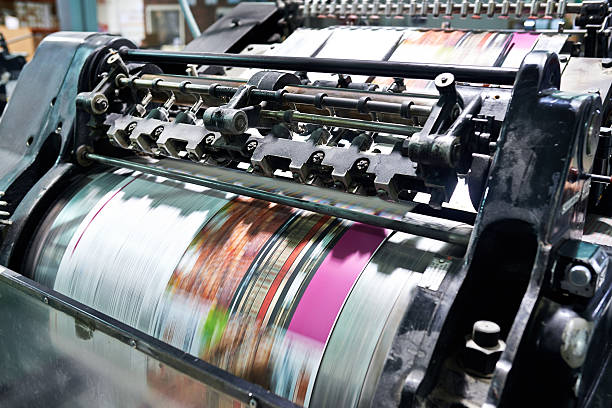
The offset printing, also known as lithography, is based on a very simple principle which has been improved throughout a century. The picture is printed on a plate onto a rubber blanket, and then on the paper. This indirect transfer process is the so-called offset part. A separate plate is needed in each color and this is why the cost upfront is expensive in terms of setup.
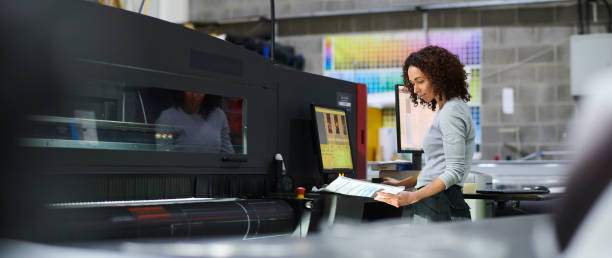
Digital printing, however, is virtually the same thing as that inkjet or laser printer that is in your office, only larger, faster, and far more advanced. There are no plates involved. Then it is right out of the computer into the press, and ink or toner hits paper head-on.
When Offset Makes Sense
I was engaged with a nonprofit organization that was engaging in printing of their annual report last year. What they required was 25,000 copies with accurate color that matched their brand requirements. The selection of offset was the apparent option and the reason is as follows.
After the generation of those plates, and the calibration of the press is complete, the offset printing is economical on an enormous scale. The price per unit also goes down significantly with the volume. The original cost of making plates is apportioned to thousands of impressions and every extra copy costs virtually nothing.
The offset is where it is brilliant in color consistency. I have watched press operators by matching Pantone colors with amazing precision and they have the same consistency during press runs of 100,000 pieces or more. To brands who are obsessed with their shade of blue or red, as they ought to be, offset offers the reliability that digital cannot.
Another benefit that does not receive due attention is the flexibility of the substrate. The material works well with textured papers, awkward stocks and specialty finishes. I even printed wedding cards on homemade cotton paper which would have blocked even the digital press in no more than few minutes.
The Digital Advantage
The following is a case that exemplifies the power of digital. One of the local real estate agents called me one Tuesday afternoon, panicking. She was holding an open house on Saturday and required 500 quality brochures with an advertisement of a newly listed property. We would be still making plates on Saturday with offset. Thursday morning she had her brochures with the digital.
Variable data printing provides opportunities which offset can just not reach. Consider the scenario when 5,000 postcards are being sent, with each one of them addressing the recipient by his or her name and offers something personal to them, depending on the purchase history. Digital can cope with this without any difficulty. One impression is not the same as another, and does not need to be slowed down the press.
Quality Considerations in 2024
The difference between the quality of the offset and digital processes has also been minimized over the years that I have worked in the industry. Digital output appeared blatantly inferior at first – flat colors, distinctive toner patterns, restricted color range. Modern advanced digital presses, especially HP Indigo and other liquid electrophotography models, have results that are indistinguishable to even an expert print buyer, as compared to offset.
At that, offset, nevertheless, has still its advantage in some applications. Photographic art using subtle gradations, fine art reproductions and projects that require the highest level of accuracy in color normally favor offset. This may be unnoticeable to an ordinary eye, but discriminating customers see.
A Guide to Choosing the Right Project.

Over the years, I have created a list in my mind which very seldom makes me go wrong:
- The offset is the correct choice when: The number of pieces per quantity is over 2,000-3,000 and matching of the brand color is essential, specialty papers are involved or special Pantone colors are necessary.
- Use digital when: You want a quick turnaround, the quantity you are printing is less than 1,000 pieces, you have variable data, or you are printing more than one version but in small quantities.
- The gray zone: A range of 1,000 to 3,000 pieces, request quotes on both. It is a matter of details such as paper selection, color demands, and deadline that determines the winner.
Cost Breakdown Reality
The method of pricing between these two approaches is very different. There are high fixed costs (plate-making and press calibration, initial paper waste) of offset which do not depend on quantities. Digital has low set-up costs and high unit costs.
The crossover point at which offset is cheaper depends on the project, however, in general, the crossover point in basic projects ranges between 1,500 and 3,000 impressions. Multicolor, intricate work could have offset becoming economical at large quantities.
Don’t forget hidden costs. Rush charges are large since you cannot accelerate the production of plates easily. Shipping services out of specialized offsets can increase cost incurred that local digital printing does not.
Environmental Considerations
Each of the two approaches has some environmental effects to consider. Offset operates in petroleum based inks but vegetable based alternatives have become common in most shops. Digital removes the process of plates using chemicals and saves paper wastes when setting up.
None of the two approaches can be described as greener. The choice of paper, the use of energy, and waste management techniques used in particular companies is more important than the technology of printing.
Frequently Asked Questions
What printing process produces the high-quality?
Traditionally, there has been a higher quality difference in large run production with exact color demands in offset, but the digital presses have become a virtual tie in the general commercial use.
How many does offset printing pay to print?
Mostly, offset is cost-effective when the number is more than 2,000-3,000 pieces but again this depends on the complexity of the project and the color requirements.
What is the speed of the digital printing versus the offset one?
The average time taken to do digital printing is between 24-48 hours whereas with offset it takes 5-10 business days because of the plate production and press set up.
Is a digital printing comparable to Pantone colors?
The digital presses are emulating the Pantone colors but cannot be the same. True Pantone matching can be obtained by spot color inks offset.
Does either of these approaches work better with business cards?
Digital is normally more cost-effective in the case of quantities less than 500. To a greater number of units with custom finishes, offset tends to be more advantageous.
Is one of the methods more eco-friendly?
They both have environmental effects. Digital minimises chemical wastes and paper damages; offset efficiency is better at high volume minimising the consumption of resources per piece.