
High-Quality Printing Solutions: A Complete Guide to Bringing Your Vision to Life
High-Quality Printing Solutions, I have worked over fifty percent of the fifteen years with printing companies, either as a marketing coordinator who placed orders on promotional materials of thousands of copies, and subsequently as a consultant to help the small companies navigate the vast universe of custom printing. The lesson that I have gained is that most individuals seriously overestimate the opportunities as well as the traps of custom printing services.
I will take you through all of it that I wish that someone could have informed me when I initially started.
What do You Mean by Custom Printing Services?
Custom printing services can be utilized to print your designs, logos, photographs or text on any imaginable surface. We mean business cards and brochures, vehicle wraps, bespoke packaging, promotional items, and banners of large size.
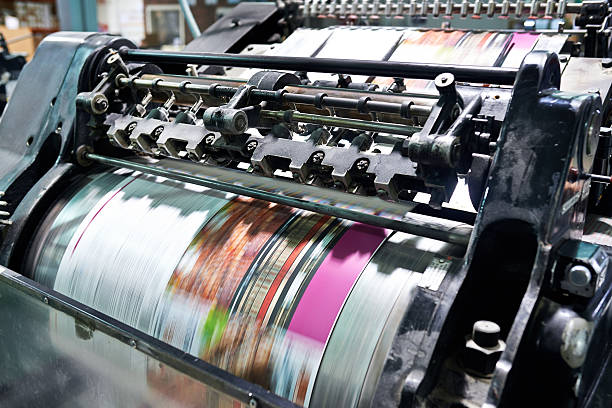
The industry has changed drastically as compared to the times when printing only involved inks on paper. The current custom printing includes digital printing, offset lithography, screen printing, sublimation, direct-to-garment (DTG) printing and UV printing. Both the approaches have varying purposes, budgeting and quality needs.
The kind of Custom Printing Service is offered.
Marketing and Commercial Print
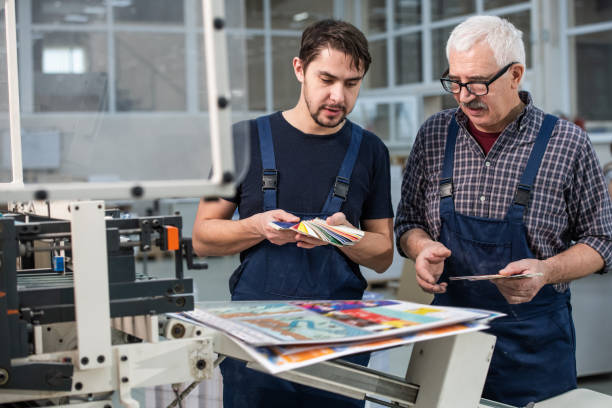
This is still the bread and butter of most printing companies. This is done in business cards, letterheads, flyers, postcards and catalogs, presentation folders. When I place order of marketing materials to clients, I will always suggest the basic first before including the specialist.
One of the restaurant owners I had worked with last year did the mistake of ordering 10,000 menus before doing her final offerings. In three months, she had replaced a half of her dishes and boxes of useless paper. Begin small, particularly when you are still trying to feel your way in business.
Clothing and Advertising Merchandise.
Personalized t-shirts, hoodies, hats, tote bags, mugs, pens and endless other branded products are now indispensable to companies that are developing a name. The difference between provider quality is astounding. I have seen screen-printed shirts that lasted a hundred and more washes and those that broke after the first one.
Screen printing is suitable when the quantity of the color to be used is minimal and the number of prints to be made is large. DTG printing does well in detailed, photographic designs in small quantities. Vinyl used in heat transfer is a durable material to use on athletic items to print names and numbers.
Large Format and Signage
Special equipment and skills are needed in banners, posters, window graphics, vehicle wraps, trade show displays and wall murals. The learning curve of large format printing is a long one due to the fact that you are more than likely committing major investments.
Packaging and Labels
Shipping material, product labels, custom boxes and product packaging inserts have all taken off with the e-commerce boom. The unboxing process currently serves as a content source in social media, and therefore, packaging can be considered a continuation of brand identity.
Selecting the appropriate printing partner.
Following my experience, I have consulted dozens of printing companies and created a mental checklist that saved me many headaches.
- Request physical samples. Always do not order a big amount of them because of only digital demonstrations. The colors used do not show up on the monitors as they do on the printed materials. The weight of paper is different when one holds it, as opposed to when reading on a specifications sheet.
- Realistically know turnaround times. Typical standard turnaround is 5-7 business days of commercial printing. There are rush services that are available but are much more expensive. I have seen customers spend twice on express delivery overnight due to a lack of proper planning.
- Check file prerequisites. The majority of professional printers take logos in the form of vectors (AI, EPS, PDF) and photographs in high quality (at least 300 DPI). Being able to offer low quality files implies low-quality output, no matter how costly the printer.
- Inquire of the processes of proofing. Established firms provide online validation at the least, and actual validation is offered on color sensitive work. Do not give a print run without proofreading it.
Cost Factors and Budgeting Factors.
The pricing of printing is determined by the quantity, materials, colors, finishes, and turnaround time. The economies of scale come into play to a large scale-the unit costs decrease considerably with the increase in quantities.
One of the clients had recently required 250 business cards. The price came to $45. The cost per 1000 cards of the same specifications was 55. The additional 10 dollars purchased the same amount 4 times. Nevertheless, you end up wasting money by ordering more than you require particularly on something whose information may be altered.
There are special finishes, such as foil stamping, embossing, spot UV coating, and die-cutting, which make them more upscale just to be extremely expensive. Such a high-quality finish is ideal in upscale markets where impression counts such as business cards of luxury.
Common Mistakes to Avoid
The deaf ear to safety and bleed. The elements in design that are supposed to reach the paper edge should go beyond the edge (bleed area) to accommodate cutting tolerances. Text that is too near to the edges is also in danger of being cut off.
Ignoring the paper decisions. Finish, paper weight and coating have a tremendous impact on the end results. Glossy finishes are good to take photographs in but make glare. Matte also has finishes that are sophisticated but display fingerprints. Uncoated papers are organic and with different absorption of ink.
Environmental Considerations
Sustainability has been a growing issue in printing. There is also recycled paper, soy-based inks, FSC-certified paper, and greener finishing choices to the green-conscious companies.
These are some aspects that are valued by some clients. There are those who are price sensitive. Both are not bad, it is only that you should set priorities and express them.
The Future of Custom Printing.
Unless it is dominated by digital communication, printed materials still have a psychological power. Research has always proven that people more easily recall when reading hardcopy than when reading screens. The physical marketing establishes emotional associations that cannot be achieved through digital marketing.
Variable data printing can now be personalized at scale, so no longer merely the address field but the whole postcard would have the name of the individual receiver embedded in the design. Web-to-print systems allow business to self-order materials with brand integrity provided by locked templates.
Frequently Asked Questions
What is the average length of time of custom printing?
Most commercial printing takes 5-7 business days to be turned in to the best of your knowledge, but rush service is available with 24-48 delivery at elevated costs.
Which file type is the best to be printed?
The best file type to use is the logo and graphics (vector files PDF, AI, EPS) and photographs (high-resolution files CMYK color mode 300 DPI).
Which provides a better digital or offset printing?
Digital printing is economical when printing small quantities and turnaround is required. The offset printing provides high quality and cost-effectiveness to large quantities of runs more than 500-1000 pieces.
What can I do so as to have the right colors?
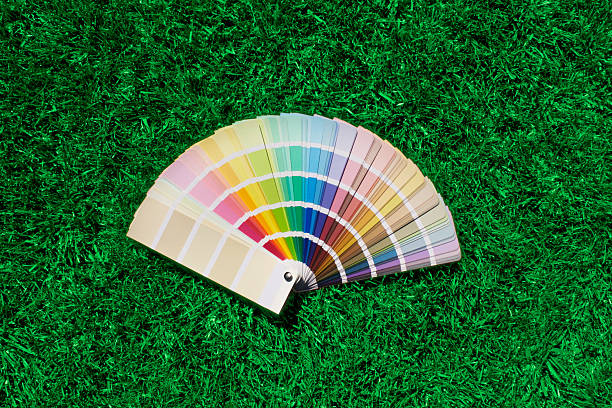
Order physical proofs prior to production, ask Pantone to give a brand-critical color, and specify what the color should look like.
What is the minimum quantity to order to do some custom printing?
Digital printers come with single-item printing on many. The minimum quantities needed are normally 100-500 pieces depending on the product in offset printing and screen printing.