Digital Printing Technology: A Comprehensive Guide to Modern Print Solutions
Digital Printing Technology, I recall I still entered the first commercial print shop in 2008. Massive offset presses took up much of the floor, the odor of ink lingered in the air and set up time on each job took hours. Cut to the present day and the picture is all different. The digital printing technology has essentially altered our way of thinking towards the production of prints and having been part of this revolution, I can say that it has been more than a revolution.
And what is Digital printing?
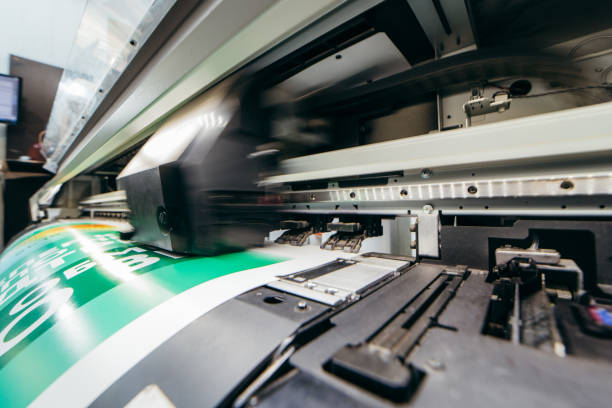
The essence of digital printing is that digital files are transferred onto different substrates without the use of printing plates, screens or other intermediary processes. Imagine that you are sending a document directly off your computer to your office printer, as compared to the olden times when you had to have document typeset and plates made.
The technology operates in 2 key ways, which include inkjet and laser printing. The inkjet systems spray microscopic sprays of liquid ink onto the surface whereas the laser printers employ heat to melt the toner powder on the material. Each method has its niche, and usually, the decision between the two methods can be made based on the type of application, the type of substrate to work with, and the volume needs.
The Magic behind the Technology.
Digital printing is really interesting when you get down into the specifics of the way it works. Printheads in modern printers have thousands of nozzles that shoot tiny ink droplets into a printer at very high speeds–some printers have over 100,000 droplets falling a minute out of one nozzle. These droplets may be smaller than 1.5 picoliters about one-billionth of a teaspoon.
One of the strongest features that can be implemented in this space is high-powered variable data printing. Digital systems are able to modify text, pictures and graphics on every impression unlike in the past where all pieces appear alike because of the use of traditional systems. This ability has seen the possibility of tailor-made marketing campaigns which in actual sense do not target the masses, but the individuals.
Large Printers: The key categories of digital printing systems.
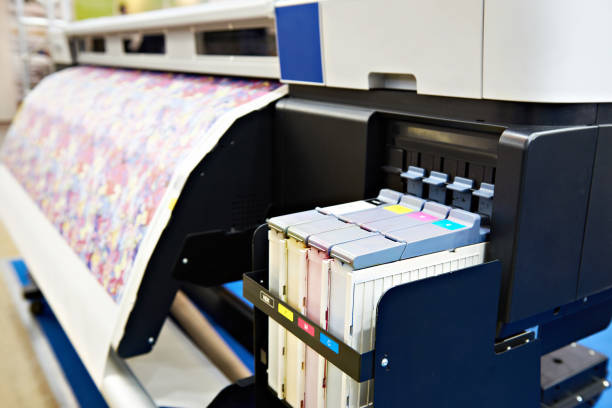
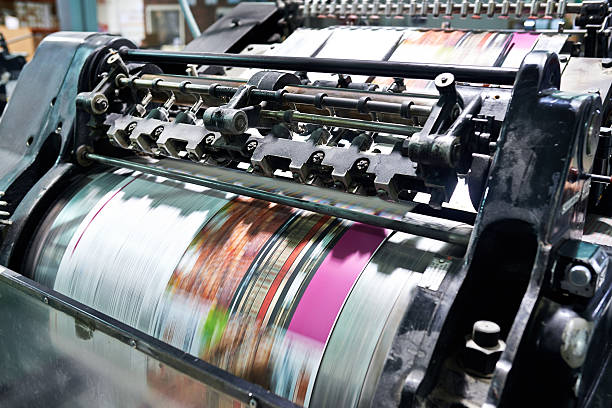
Inkjet Presses Production Inkjet Presses have turned out to be workhorses in high-volume settings. There are companies such as HP, Canon, and Ricoh that have systems which can print hundreds of feet per minute. These machines deal with books and catalogs as well as transactional and marketing papers.
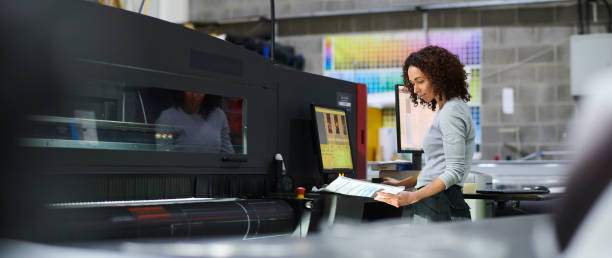
Electrophotographic (Toner-Based) Systems have some advantages in particular application, especially the need of sharp text and of uniform color in shorter runs. The current generation makes a quality to challenge the offset printing to the majority of observers.
Wide-Format Printers are used in the signage market, display market, and textile market. A tour around any trade show or retail setting will have you overwhelmed with digitally printed graphics including banners, wall wraps, floor graphics, and point-of-purchase displays.
Applications in the Real World in Industries.
There is no more vivid illustration of the effect of digital printing than in the publishing industry. Print-on-demand has resulted in no gamble on print runs that publishers have to make. In my early days in this profession, a publishing firm could print 5,000 copies of a new book and hope it would sell. Individual books can now be printed on demand when orders are received and waste and financial risk is cut down to bare minimum.
Another booming growth sphere is packaging. Brands are becoming more desirous of shorter runs with more variation: seasonal designs, regional tastes, limited editions. Craft brewery now has the ability to design special labels in little batches and that would have been too expensive had it been done by flexographic printing.
Dyeing and fashion industries have adopted the digital printing method of producing fabric. It has been appealing to the high-end fashion houses as well as the mass-market retailer because of custom patterns, less water use than traditional dyeing, and faster turnaround times.
Benefits to be taken into account.
Speed to market is one of the main advantages. Jobs can be transferred between file and finished product within hours and not the days or weeks required in the presence of plates or lengthy setup processes.
Short-run economics of cost-effectiveness alters the economics of printing completely. The point of offset that becomes cheaper has continued to grow with the advancement in the digital technology.
Less waste is more desirable among businesses that are environmentally aware. Online presses do not need makeready sheets to maintain the color fidelity, and print-on-demand does not need stores of old stock.
The consistency of quality in printing during the first print to the final print eliminates the variability in the traditional techniques when the balance of ink/water and plate wear would change as the technique progressed through a run.
Restrictions and Good Faith.
Digital printers cannot be used in all applications and it will be misleading to act otherwise. With very large volumes, which is, in the millions of impressions, the traditional offset still costs less per unit. Digital systems are not yet up to specific metallic effects that are needed in certain specialty applications, demanding precise matching of the Pantone effects.
Compatibility with substrates has become much better but has remained a limitation. There are some textured or anomalous materials that are more amenable to conventional techniques.
Prices of first time equipment to run production-level digital presses are in the hundreds of thousands or millions of dollars, although this has been overcome by entry-level equipment.
The Road Ahead
I am really thrilled by the way this industry is developing and what is in store. The application of artificial intelligence is enhancing the control of colors and predictive maintenance. Nano-inks and functional printing are making electronics and sensors be printed on surfaces. This is because manufacturers are still enhancing sustainability through creation of greener consumables.
Print industry is not actually dying but it is changing. The digital printing technology is at the heart of that change and print is now more about relevance and personalization than ever before and more sustainable than before.
Frequently Asked Questions
How does digital printing differ with offset printing?
Digital printing is a technology where files are transferred to substrates without the use of plates whereas offset involves the use of plates to transfer ink. Digital has short run and variable data capability; offset is cost effective at very high volumes.
Does digital printing produce good printing?
State of the art digital printing is of good quality comparable to offset in most applications. A lot of professionals are incapable of differentiating the two in blind tests.
How many time does digital printing take?
Jobs may be accomplished in hours depending on their complexity. Turnaround times are much shorter than the traditional ones without plate-making and lengthy setups.
What are some of the materials that can be printed digitally?
Digital printing can be done via the use of proper technology on paper, cardstock, vinyl, fabric, plastic, wood, metal, glass, leather, and numerous specialty substrates.
Does digital printing protect the environment?
Digital printing tends to generate fewer waste materials, less chemicals are used and print-on-demand can be done thus minimizing over production. Nonetheless, the effects on the environment differ depending on the particular technology and consumables.
What are the most common digital printing industries?
Digital technology is tremendously applied in publishing, packaging, marketing, signage, textiles, photography, and commercial printing.