Custom Business Cards Printing: Your Complete Guide to Making a Lasting First Impression
Custom Business Cards Printing, It is undoubtedly effective to pass a well-designed business card to a person. I have been in the print business more than twelve years, and no matter how many digital versions there have come, there is still something that cannot be substituted by any of them the actual feeling of contact between two professionals when they are giving cards.
A month ago, I attended a networking event where I met a startup founder who provided me with a card made of cotton paper that had been recycled and had to be letterpressed. We spent about three minutes together, yet I do not forget her name and business. The trick of personalized business cards is that.
The Reason Why Custom Business Cards are Still Important in 2024.
First let us speak of the elephant in the room. We do have LinkedIn, digital business cards, QR codes, and many applications which are meant to substitute the usual business card. Still, the traditional business card printing business is steadily expanding.
This is due to the fact that using physical cards elicits emotional reactions, which cannot be realized when using digital alternatives. By giving a person a well-crafted card you are exercising attention to detail and professionalism even before you get down to the point where you actually start negotiating business.
I have attended numerous trade show and conference transactions. Those, who communicate using only digital pieces of information, may forget about one another in several days. Individuals who get physical cards that are memorable, are more likely to follow up and recollect the interaction more vividly.
Selecting the Appropriate Paper Stock.
Choosing paper may appear as a small thing, but this will completely transform your card in terms of touch and functionality. These are what I have learned about handling thousands of print jobs:
Most of the professionals are comfortable with standard cardstock (14pt-16pt). It is affordable, it prints beautifully, and it carries in wallets and cardholders quite well. It begins with most of the clients who are ordering business cards.
Cardstock premium (18pt-32pt) is at once the indication of quality. When I had given the personal cards an upgrade of stock 14pt to 24pt a few years ago, the reaction was quite different. Some people left comments on the card itself, and it opened discussions automatically.
Niche papers such as cotton, linen or recycled stocks narrate a story of your brand values. One of the sustainability consultants that I worked with selected 100 percent recycled post consumer paper.
Complete Designs to Make Your Cards Unique.
Finish type used has a bearing on the appearance and longevity. The following is what is really practicable:
Matte finish minimises glare effects and gives a covert and elegant appearance. They are good to use in notes written by hand as ink sticks better. Nonetheless, they exhibit fingerprints and smudges more conveniently in comparison to glossy ones.
Gloss and UV coating provide protection to the cards and dramatic colors. Photos and colorful designs are the great beneficiaries of this treatment. The downside? They may be a bit generic when you do not make your design shine to it.
The use of the soft touch lamination has gained much popularity and frankly speaking, I can see why. Cards of this finish are practically velvety, and give a surprising feel that people will recall.
Spot UV is a mix of matte and gloss in their strategic locations, bringing out the design features of your logo. It is more costly yet produces really amazing effects when done well.
Principles of Design that Work.
Having checked thousands of business cards designs, there are some trends as to what is working and, on the contrary, what is a disaster.
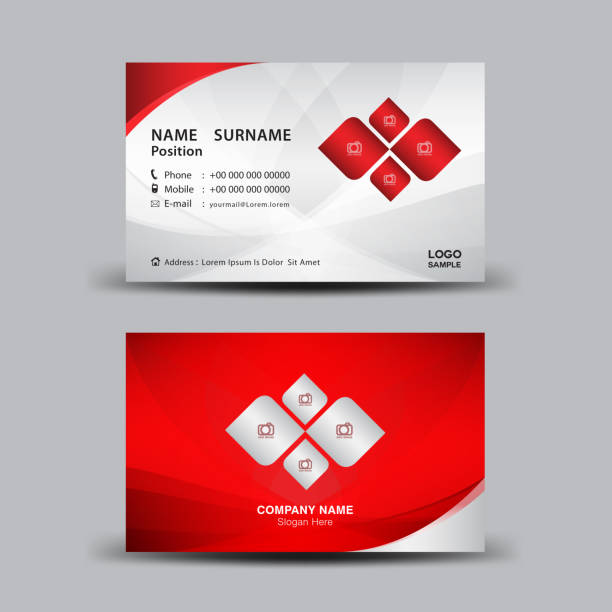
It is simple that prevails almost always. To communicate vital information, your card must be fast. The name, position, business, contact, email, and web site must be immediately readable. Anything that goes further competes against attention.
There is no wasted space in white space. The most frequent mistake that I encounter is the overloading of a small 3.5 x 2″ canvas. Huge margins and space create a more premium feel and ease of reading your card.
Typography is extremely important. Select fonts that represent the personality of your brand and can be read at its small size. These font scripts may appear beautiful in the computer monitor but become unreadable at 8pt type. Although it is always preferable to test the readability at real print size before laying out designs.
Printing Methods Explained

It is better to know what you have to choose:
Digital printing is the most economical where the quantity is small, usually less than 500 cards. The quality has been enhanced significantly and the turnaround time is also quicker compared to the conventional ways.
Offset printing is economical on high quantities and provides an extremely high level of reproducibility of color. When you are ordering thousands of cards or you must have the exact matching of Pantone, then the offset is the standard of gold.
The debossed impressions made by letterpress printing are touchable. It is much more costly but creates truly artisan results which cannot be achieved with digital techniques.
Bureaucratic Procurement.
In making your order, do not merely think of the immediate need:
Get a little more than you think you will need. It is embarrassing to be caught without cards in an important networking activity. The majority of printers will give substantial price discounts at larger volumes anyway.
Ask physical evidences on significant orders. Printings are never exactly what colors appear on the screen and it is better to detect the mistake before the printing is attempted to avoid losing money and time.
Common Mistakes to Avoid
- Going to style rather than substance. Odd geometries, excessive thickness of cards, gimmicks may appear innovative but in practice usually cause practice issues. The cards which do not fit in regular holders are discarded.
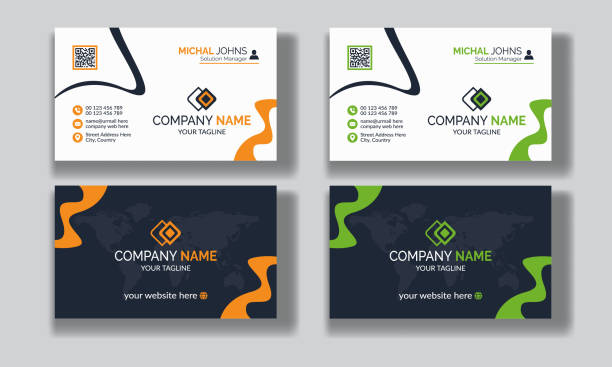
- Neglecting the back. There is a lot of good real estate on the reverse side of your card. It would be best to add a tagline or QR code or some other design feature instead of leaving it entirely plain.
- Ignoring print margins. Elements of the text or critical design that are too near edges are likely to be trimmed off. The minimum safety margins should be 1/8 inches at all times.
Frequently Asked Questions
What is the number of business cards I should order at first?
Start with 250-500 cards. This amount ensures affordability and scalability to make changes to your design to match a business.
How big is a typical business card?
In the United States, the dimensions are usually 3.5 x 2. European and Asian markets tend to adopt slightly different sizes.
What is the average time of the custom printing?
Turnaround is between 3-7 business days. Additional fees are typically charged on rush options.
Is it necessary to add social media accounts to my card?
Only use the platforms that you use regularly in the workplace. A single or one and two applicable handles are adequate.
Is it worth buying the double-sided printing?
Generally yes. The extra cost is low in comparison to the design flexibility and information capacity.
A question that arises is what file format to present to the printing process?
Embedded fonts and 300dpi resolution are successful with PDF files. AI, EPS or high-resolution JPEG files are also usually accepted by most printers.