
A Realistic Guide to Navigating Custom Printing Services
I recall first of all when I held in my hands a finished project which I had designed and sent to a low-budget printer. It consisted of a set of brochures of a client who was launching. The royal blue was deep and dominating on the screen. On paper? It resembled a purple bruised. The paper paper, which I expected to feel crisp and heavy flopped like a wet noodle.
That was fifteen years ago. Since that time, I have been dealing with print runs of luxurious packaging of small booth cosmetics up to tens of thousands of direct mailers used in political campaigns. One thing I have been taught though is that custom printing is an art form hidden in the disguise of a manufacturing process. The physical weight of print has never been more significant in the digital pixel-crazed world, however, unless you make a mistake.
The Great Divide: Online vs. Offline.
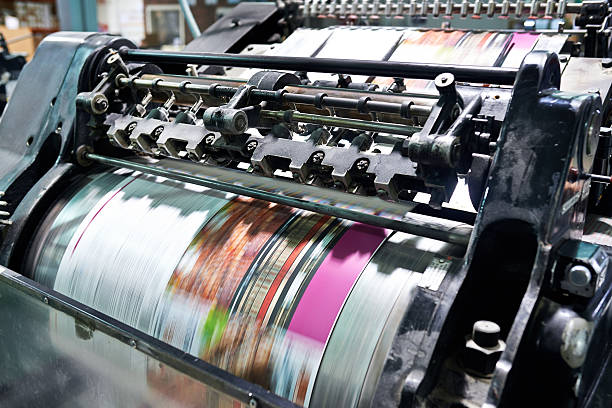
The initial choice you are most likely to make is the method of printing and frankly speaking this is where most of the budgets end up dying.
The Fact: The installation expenses are expensive. When you need 200 flyers, then there is no economic sense in offset. But if you are printing 5,000? The unit price is considerably reduced. I normally inform the clients that the tipping point is about 500 to 1000 pieces depending on the shop.
Digital Printing Digital printing is literally a huge, high-quality laser jet. No plates, minimal setup.
The Reality: The difference between digital and offset has been minimized over the past ten years. Digital is the king of short runs (such as putting a different name on each postcard), variable data (such as a particular name on each postcard), or of rush job work.
The Factor of Touch: Paper and Finishes.

I cannot emphasize this fact: people create their own opinion about your brand by touching it with their hands even before they read a single word. This is haptics the psychology of touch.
I once had a real estate agent who demanded to have the lowest cost business cards. I warned him. They were disposable when he gave them to them. He later changed to 16pt stock with soft-touch matte finish (nearly at the feel of velvet/peach skin).
Key Metrics to Watch:
- GSM/PT: This is used to measure thickness. An average printer paper weighs approximately 20lb bond. A good business card has a starting point of 14pt. Luxury You seek 32pt (two sheets glued together).
- Allowances: UV gloss is a glossy, protective (superior in photos) coating whereas aqueous coating is a semi-glossy coating that is barely noticeable. Uncoated stock is understood as genuine and is fashionable among organic or Earth-friendly brands, with the ink preferring to absorb and appear less vivid.
The Merch Minefield: Clothing Printing.
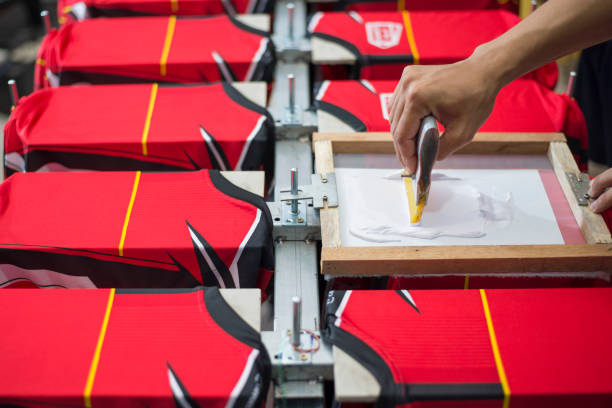
Custom printing is not necessarily paper. When you are buying a branded apparel (t-shirts, hoodies, totes) you have to decide whether to use Screen Printing or DTG (Direct-to-Garment).
Durability Gold Standard: Screen Printing. A mesh screen forces the ink into a screen. It lasts for years. However, you pay per color. Supposing you have a six-color logo, then you are paying a six-screen.
The caveat: I have noticed that in case the pretreatment was not properly applied, DTG prints begin to fade after ten washes. It is ideal well on once-time custom presents or small production, however on the case of a company uniform I will always direct a client to embroidery or a screen print.
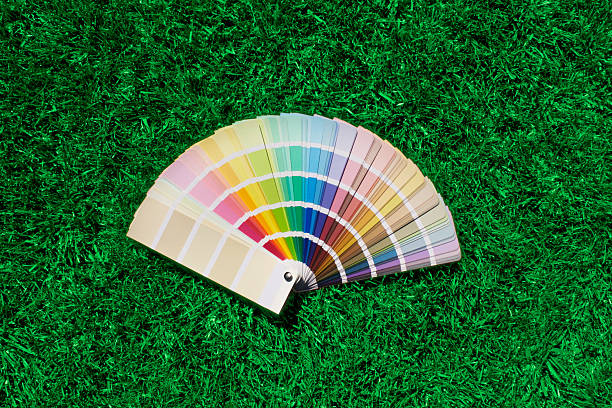
The Color Trap: RGB vs. CMYK
This is the first technical mistake that I observe. The light that your computer monitor emits is Red, Green, and Blue (RGB) and this light is used to make colors. Printers consume ink; they absorb light by Cyan, Magenta, Yellow and Black (CMYK).
Your colors, especially those of neon greens and electric blues, are colors which cannot even exist in standard printing ink. When you feed an RGB file to a printer, their machine will attempt to make a best guess at the most matching appropriate color, and you are likely to get that same brown failure that I had with those brochures a few years back.
The Future of Sustainability is not an Option.
Over a decade ago, eco-friendly printing used to refer to costly, dingy, speckled paper. It has become a normal demand of most consumers today.
Recently I headed a project, a coffee roaster, who wanted their packaging to be like the fair-trade beans. We employed certified FSC paper (this means that it is a product of a well-run forest) and soy inks. Soy inks give out less of the VOCs (volatile organic compounds).
Your trust is created by showing that you have considered the lifecycle of your published material. Recycled material or biodegradable vinyl in making the stickers is not merely a nice one, but rather a selling feature that you ought to be writing on the packaging itself.
The Vetting Process (Wooing a Partner)
So, how do you pick a printer? These are the large online competitors (Vistaprint, Moo, etc.) and the local stores.
Frequently Asked questions (FAQs).
Q: What is the reason why colors on my printed flyer are not the same as those that are on my phone?
A: Phones have color that is vibrant and is made through RGB (light). The CMYK (ink) used by printers is subtractive. Certain colors of a screen, particularly of a neon screen, are not exactly reproducible using ordinary inks.
Q: What is a bleed and what is its necessity?
A: A bleed is the space in art that is not covered or overlapped by the real boundary of the paper. Printers produce on a huge paper and cut the paper. Unless your design gets beyond the cut line (bleed), you may end up with thin, ugly white strips on the edges of your completed product.
Q: Is 300 DPI really necessary?
A: Yes. The standard image in the web is 72 DPI (dots per inch). When you attempt to print them they will appear pixelated and blurred. The industry minimum requirements of 300 DPI are necessary to produce crisp print.
Question: Is it possible to print black paper with white-colored ink?
A: Not using regular digital printing, which typically considers the concept of white to be the lack of ink (using clear paper). In order to print white on dark paper, you require a special printer with a feature of white toner or screen printing.
Question: What is the average time of custom printing?
A: It is possible to do digital jobs within 24-48 hours. The average time to offset print is 5-10 business days (drying up and completion) time. Delay constantly to allow time to ship and have the proof approved.