Direct Mail Campaigns: A Practical Guide to Cutting Through the Digital Noise
It is so defiant to open your mailbox nowadays and see other than bills or credit card offers. I recall one evening when I was with a client in the spring last year, and she was going through a pile of gorgeous postcards designed by a local boutique. She stopped, and, in fact, read it, and said she might come by that weekend. It was one of those moments that made something I was seeing over a few years in the marketing walk come together direct mail is not dead. It’s just been sleeping.
The Reason why Direct Mail is not Over in 2024.
Let me be honest with you. At the time when I entered the field of marketing fifteen years ago, everyone was sure that the physical mail will be totally substituted by email. But this is where we are and the rate of direct mail respondents is around 4.4 percent as compared to the 0.12 percent of email, as per latest statistics of Data and marketing association.
This is due to a rather straightforward reason sensory engagement. When a person carries your postcard, brochure or catalog, he/she is creating a physical memory. It has like, substance, even smell. Our brains are handling more than pixels on a screen and the processing is more recollected.
I have witnessed this to play out in several occasions with clients in a number of industries. One of the regional insurance firms that I talked with last year had already fully forsaken direct mail in favor of online advertising. Their lead costs had increased three-fold in three years. Our next move was to re-launch a small postcard campaign to new home buyers and in four months, the cost per acquisition has fallen by 40 percent.
The Psychology of the Audience.

The generic mailing lists are relatively costly methods of filling the recycling bins. Surgical targeting is the beginning of the campaigns that will actually yield returns. Do you reach out to people that just came into your service area? Revenue bracket of business owners? Previous customers not buying in eighteen months?
One of the restaurant owners of the shop that I was working in Phoenix wanted to do a blanket mailing on all the addresses within the radius of five miles. We instead dragged data on household with children under twelve in the radius, that is, in neighborhoods at his price range. His redemption proportion on offers of birthday parties booking was almost triple of what similar restaurants had reported with wider mailing.
Inventing an Irresistible Deal.
This is where the majority of the campaigns fail. They post something that is presentable, but leaves no compelling reasons to act in the recipients. Your direct mail must address one point right now, and that is, what is it in it to me?
The brightest offers do not make one feel that he or she is being manipulated. The time based discounts, previews or real value add-ons are much more effective than the ambiguous requests to come sometime.
Timing Your Send
This is not always considered, however, when your mail is received, it is truly a big deal. B2B mailings usually work in the middle of the week and land on the desks when the decision-makers are in fact receiving mail. The Tuesday to Thursday delivery will tend to be a better response to consumer campaigns without the Monday avalanche and Friday dismissal.
The Imaginative Factors that Cause Reply.
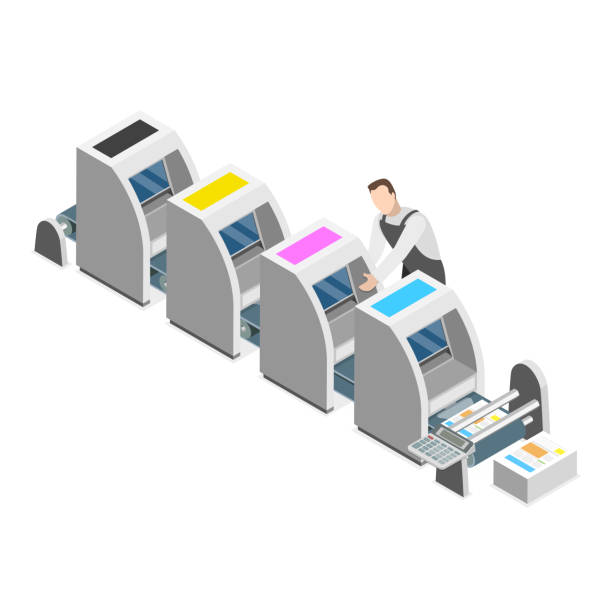
Postcards are cheap and they are immediately visible. Personality in an envelope letter is more personal and does better with higher ticket offers. Dimensional mailers (mailers where the object is easily visible, i.e. boxes or tubes) are the highest open rate, but they are much more expensive.
I have discovered postcards to be an effective means of awareness campaigns and basic offers. The letter format is generally more effective when it comes to selling consulting services or luxurious products since it is a signal of importance.
Copy That Converts
Write as though you were talking to a single person and not the audience. Use “you” liberally. Bring with advantages, not features. A heating and cooling business does not market high-efficiency HVAC systems. They advertise: Coming home to the right temperature and not fearing your power bill.
Make headlines snatchy and body copy scannable. The majority of the recipients will not read all the words, they will scan through the main message and the offer.
Measuring What Matters
Direct mail response must be intentionally tracked. Physical mail requires mechanisms to be in place in contrast to digital campaigns where pixels perform attribution automatically.
Uniqueness of phone numbers, URLs related to campaigns, QR codes that can be used as links to special landing pages, and promo codes all assist in attributing the responses. I would always advise at least two ways of tracking every campaign as there are customers that will call and those that will be online.
Divide the real return by calculating the creative development, printing, list acquisition, postage, and labor. A campaign which causes 50 leads may seem a success until you notice that your lead was costing you 200 and your average customer is worth 150.
Integration: Where the Magic Happens.
The best direct mail campaigns are not in a vacuum. They are orchestrated with online touchpoints in order to form up to several impressions.
Think about sending a postcard, and retargeting website visitors of the mailing with social advertisements. Or use a mailing with catalogs and follow up with an email of some important products. This combined strategy is usually much more effective than either channel separately.
Most Frequent Misconceptions I Notice.
Having analyzed hundreds of campaigns, some common mistakes emerge: a too complicated design that does not always help to understand, weak or absent call-to-action, the inability to test various variables, and ineffective list hygiene causing unnecessary postage of bad addresses.
The biggest mistake may be that direct mail is viewed as a one-off event instead of a channel that needs to be sustained. Similar to any marketing strategy, the recognition and trust is developed through several touchpoints.
Frequently Asked Questions
What is a realistic start up budget in direct mail?
All the small businesses can test with 2-5000 which will include design, printing, list acquisition, and postage of 1000-2500 copies.
Before results are achieved, how many mailings do I make?
Projected three to five mailings will be required before making inferences. One-off campaigns hardly give sound information.
What would be the expected response rate?
The industry averages will be between 2.5 and 5 percent on prospect lists and 5 to 9 percent on house lists of current customers.
Is direct mail eco friendly?
Yes, when done thoughtfully. Recycle paper, targeted lists will help to save wastage and use printer that is FSC certified.
What should I do in order to establish a good mailing list?
Begin with your current data bases of customers. To the prospects, deal with reputable list brokers who authenticate addresses and provide demographic targeting.
What is the size of an effective postcard?
Very large postcards (6×9 or 6×11) tend to perform better than the usual size since they are noticed in the mail box.