Commercial Printing Equipment: A Practitioner’s Guide to the Modern Print Shop
commercial-printing-equipment, A visit to a commercial print shop today is a very different experience than it used to be ten years ago. Still some facilities are filled with the clatter of offset presses, but more and more the sound of digital printers is heard. I have worked in this industry, with printers, buyers, and shop owners and observed the inside-out change of this industry. Knowing commercial printing equipment involves not only being familiar with brand names or technical specifications but also getting to know what type of machine to use in a given job and can also be knowing the business implications of each investment.
The Foundation: Offset Printing Equipment.
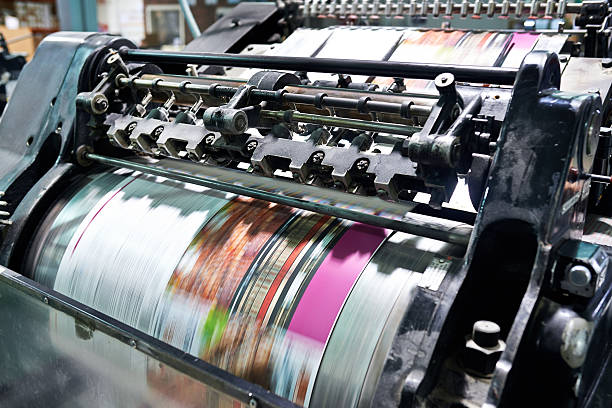
The offset printing despite its prognosis of death is the mainstay of high volume jobs. The principle has not changed so much since the first: a plate is used to transfer ink to a rubber blanket, which continuously shifts to the printing structure. The thing that has evolved drastically is the pace, accuracy and automation of this process.
The sheet-fed offset presses work with single sheets of paper, which is why they are suitable in the production of high-quality brochures, magazines, and packages. I recall observing a Heidelberg Speedmaster that operated at 15,000 sheets per hour and all of them came out registering to the dot on four color stations. The accuracy was hypnotizing, however, the set up time and wasting papers were a reminder that digital has caught up with short run.
The presence of newspaper and catalog production is dominated by web offset presses which use continuous rolls of paper. These giant machines are able to surpass 50,000 impressions per hour. You only want to invest a good part of millions of dollars in the first investment when you are printing hundreds of thousands of the same pieces.
The Digital Revolution: Production Digital Presses.
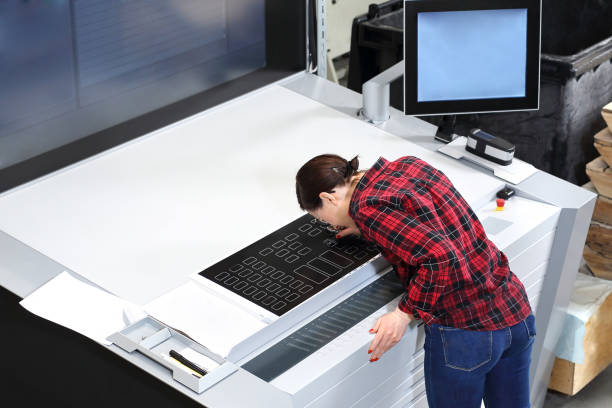
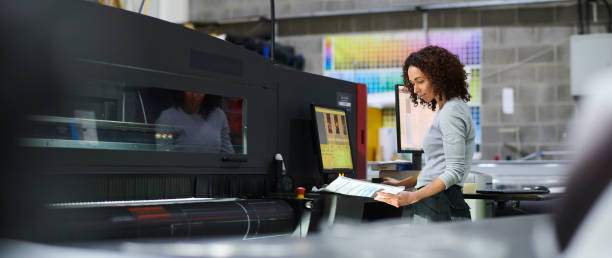
The availability of digital printing equipment essentially made what is economically viable. HP indigo, Xerox iGen and Canon imagePRESS offered offset quality color printing on shorter runs. The lack of plates, minimum equipment, and capability to exchange content sheet to sheet created new markets completely.
Direct marketing was especially changed with the help of the variable data printing. I was in a financial services firm printing customized statements with special charts, graphs and messages to each customer something that can not be done with offset printing at any cost that any customer will afford. Economical printing of 100 copies became as important as the printing of 100,000.
There are strengths of toner-based and inkjet technologies. Toner is crisp, and coated stocks are on the spot and high-speed inkjet on uncoated papers are exceptional, and can be very fast.
Wide Format: The Non-standard Sheet.
The wide format equipment has a niche but expanding market. Banners, vehicle wraps, trade show graphics and outdoor signage are made by solvent, latex printers and UV-curable printers. It has a lot to do with the difference between technologies.
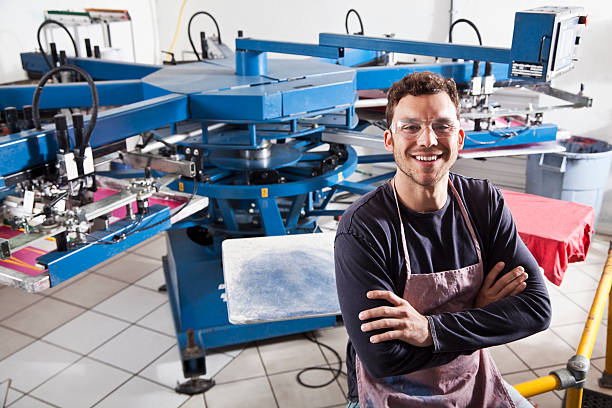
Solvents Printers are very long-lasting and cheap per square foot though they need ventilation because of fumes. The type of printers that I have been using are latex printers, and I have noticed that they are becoming more popular quickly because they have water-based inks that are cured by heat; hence, they are safer when used indoors and have similar durability when used outside. The UV printers cure the ink using ultra violet light immediately, and they can print on almost everything; wood, metal, glass, three-dimensional objects.
This is owned by Canon, HP, Epson, and Roland. I have seen stores make the business based on one large format printer, printing window decorations and event banners to the needs of local stores. The cost of equipment varies between 15,000 entry level machines and above 500,000 production level flatbed printers.
Finishing The Unrecognized Workhands.
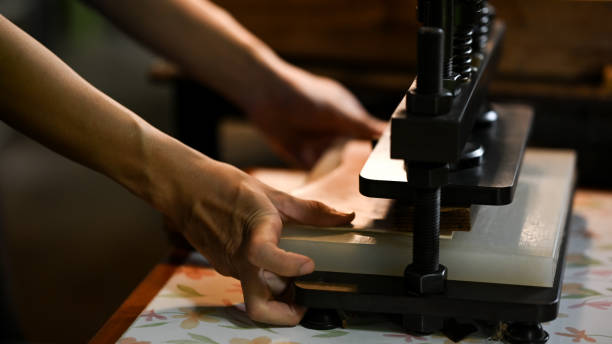
The only thing that a print shop can achieve is as good as its finishing equipment. Printed sheets are converted to finished products through cutting, folding, binding and laminating. This is a region that is normally ignored in the equipment talks but it is a source of bottlenecks very often.
Polar or Challenge programmable cutters are capable of cutting stacks of sheets with a precision of less than a millimeter. Buckle or knife folders convert the flat sheets to brochures and mailers. Page gluing is done by perfect binders and saddle stitchers by stapling folded parts.
I have witnessed stores spend a lot of money on printing machines and fail to cope with paper-based finishing. One of the companies that I liaised with reduced their turn-around time by one half by simply adding a booklet maker with automation. The investment of $40,000 was worth the improvement of the workflow in eight months.
New Technology and Trends.
It is becoming common to have hybrid workflows composed of offset and digital features. One shop may print the body of a catalog on an offset, and add personalized covers using a digital device. This will make the best out of every single technology.
Automation is not only limited to print. Web-to-print systems enable the customers to print files, approve proofs and monitor orders without human intervention. This minimizes the number of errors and liberates the staff to work on greater value.
The sustainability factor is having an impact on equipment decisions. Green friendly models, chemistry-free plates and recyclable consumables are popular among businesses that are environmentally-conscious. Certain customers are currently expressly demanding printers with vegetable-based inks or proven sustainable methods.
The Bottom Line
Businesses face a lot of competition, which means that commercial printing equipment is an important capital investment, yet the correct decisions help businesses to operate successfully. It is an industry that rewards the knowledgeable person who plans their workflow efficiency as well as keeping up with the technology without necessarily trying out all new developments.
Regardless of whether you own a print shop and need to weigh your next purchase or a buyer who wants to know what can be done, knowing the types of equipment and their abilities will assist all in making more appropriate choices. The technology is constantly developing, however, the principle is the same: adjust the equipment to the work, keep it in the right state, and never cease learning.
Frequently Asked Questions
What is the difference between the offset and the digital printing?
Digital prints are made using computer files without plates and plates are used in offset printing to transfer ink using blankets. Offset is less expensive per-unit in large volumes whereas digital is user-friendly in inexpensive short-run and variable data.
What is the price of commercial printing equipment?
Digital presses begin at about $50,000 as entry level, mid-range production presses are priced between 200,000 and 500,000, and offset presses between 100,000 and multiple millions for the high-end web presses.
How long do commercial printing equipments last?
When well maintained, digital presses have a lifespan of 5-10 years and off set presses can be productive beyond 20 years. Mechanical failure is usually preceded by replacement at the behest of technology obsolescence.
Does it have the capability to do all kinds of work on one printer?
The single machine does not have it all cost-effectively. Effective print shops make investments in equipment that complements their particular market requirements, and the investments may include a combination of technologies.
What are the requirements of commercial printers, as far as their maintenance is concerned?
Cleaning, routine check-ups, changing of parts, and professional service of the equipment on a daily basis. The maintenance contracts will generally be 10-15 percent of equipment purchase price per year.