
Custom Design Services for Print: Why Your Brand Can’t Afford to Cut Corners in 2024
Custom Design Services for Print, A number of years back, the man who owns a small artisan bakery in my hometown had come to my studio with a stack of shiny product labels in his hand and he was almost in tears. She ordered 10,000 labels of her new sourdough loaves and pastries which she created using a free template available over the Internet. This design had appeared ideal on her phone screen: warm colors of the earth, a lovely picture of wheat and all the needed ingredients and costs.
We had to design her labels afresh with our own print design and after three months, she contacted me and informed me that not only were the new labels not causing all the technical problems, but the design was being referred to by customers at the cashier desk. Her retail sales were increased by 22 percent during that period and she informed me that some of her customers have actually claimed to have chosen her bread instead of the generic brand next to it simply because the packaging looked more reliable and well crafted.
What Are Custom Design Services of Print, anyway?
Many tend to think that graphic design is graphic design, and that a graphic designer who produces great Instagram reels or web page banners can easily produce an equally great product label or brochure. Nothing can be more unlike the truth.
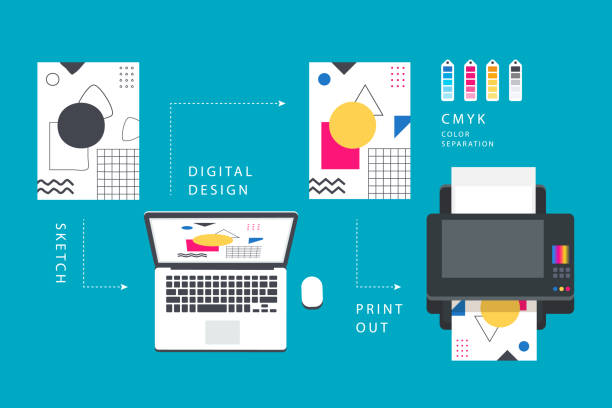
Digital design is everything about screen experience: pixels, loading speed, and captivating the users with a split second before they scroll. Print design is a whole new field. It is about the quality of ink dealing with paper, light playing on a completed product in a retail store, the grip of a brochure or business card in a person, and even the texture of the material in keeping with the design.
Print custom design services are much more than resizing a picture and choosing your colors. The right print designer will assist you in all stages of the process, including coming up with a design that suits your brand name to file preparation that will print properly and even recommend you the paper stock, finishing and printers that will do the job properly.
The Custom Print Design Process in the Real Custom Print Design Process.
I believe that many businesses do not know what is involved in a good print design. They believe that it is merely draw something and send it over. It is much more planned and the most successful print designers do not make any thing until they get all the information they require.
- Discovery and Goal Setting
The initial task of any good print designer will be to question you. A lot of questions. What is the object of this work? Do you want to make sales, brand awareness, educate your customers or otherwise? Who is your audience? What will be the location of this print article? Will it be placed in a retail stock pile, mailed to households or given out at a trade show?
To illustrate a point of view, in designing direct mail postcards on behalf of a plumbing company, my style of doing so will be very different, as compared to designing a coffee table book on behalf of a local artist. The plumbing postcard must capture attention instantly, must contain a clear call to action and must contain big and easy to locate contact information.
- Technical Pre-Planning
It is the move which nearly every user of templates does not take, and the cause of so many print jobs failing. I will never draw a line before I have ascertained the place of printing of this piece. Dissimilar printers require dissimilar bleed, resolution and file format. Other specialty printers such as foil stamping or embossing are very limited in design and must be taken into consideration at the very beginning.
I also cooperate with my clients in order to select materials at the initial stage. Your design is going to be highly influenced by the paper you design on. Bolder fonts and darker colors may be displayed on a thick and textured cardstock, whereas a thin and glossy paper may need a higher contrast in order to read the text. At the onset of my career, I prepared a gorgeous brochure of a furniture company, only to discover that they had already ordered a thin newsprint paper which is cheap.
- Concept Development
After we have our objectives and technical requirements pegged, that is when we start the creative job. Most professional print designers will show you 2-3 of the first ideas so that you have a choice. One can be more conservative and on-brand, one can be more experimental, and one can push the boundaries a little bit.
I constantly remind my clients that it is all about iteration at this point. Few ideas can be ideal and that is all right. This is aimed at determining what works, what does not and where we should be moving.
- Revisions and Refinement
As soon as you have selected a concept we begin to refine it. It is here that we fine-tune colours, fine-tune layouts, correct all the copy and make sure that everything will work once printed. This stage will also be used by good print designers to highlight on the issues you may have overlooked. To take an example, when you are asking me to print white text on a dark background, I may tell you that some printing processes may make the white text blotchy when the font size is too small. - Prepress Preparation and Proofing Prepress Preparation and Proofing are the initial stages of paper production.<|human|>Prepress Preparation and Proofing Prepress Preparation and Proofing Prepress Preparation and Proofing are the first steps in paper production.
It is the most crucial technical procedure of the whole process. Prepress work includes:
Fixing all colors to CMYK or spot colors as required by your printer.
The installation of adequate bleed and crop marks.
Embossing all fonts in such a way that they do not change automatically when the file is opened by the printer.
Test image resolution to have everything printed sharp (300 DPI is an industry standard of print)
Identifying any minor mistakes that may bring about printing delays and faults.
Once this is done we request a physical proof of the printer. I have to emphasize it, and I must do it, do not forget to order a physical proof. Screen proofs and digital proofs are deceitful. The colors will seem different on paper than what they appear on your computer screen, and little problems in the layout are only noticeable when you are actually holding the product in your hands.
Future of Custom Print Design.
So what is the future of custom design services of print? The industry in 2024 already has a number of trends that are already taking shape:
Sustainability
There is an increasing amount of clients requesting assistance to design print materials that are more environmentally friendly. This is not only about the usage of a recycled paper. When you have a good print designer, this person can assist you in streamlining your design so that it can print less ink, use soy based inks, eliminate unnecessary processes associated with finishing as well as downsize your packaging so that there is less waste of material. Even this year I have had several clients ready to compromise their design so that they do not foil stamp and do not undergo other processes that are difficult to recycle.
Blending Print and Digital
Gone are the days when print and electronic marketing do not know each other. Custom print design is being used to fill the gap by other brands. It does not simply imply a QR code slapped on a brochure (although that can be successful provided it is done properly). It involves developing print materials that make people interact with your online content, or basing your print design on the information you got in your online marketing efforts. As an illustration, one of my clients relied on their social media analytics to discover the colors that would best sell with their audience, and we used those colors to make their new package design.
Accessibility
Print design is no longer about accessibility. Brands are becoming more conscious of the fact that they must make their print materials to be accessible to all, even those with poor eyesight, a lack of color sense and other impairments. This involves high contrast colors, font sizes, cluttered background and ensuring all the important information is easily accessible.
Conclusion
In the age of bombardment by thousands of digital messages every single day, print has one superpower, it is physical. Human beings are able to carry it, feel it, and retain it. An effective print work does not merely pass information. It conveys care. It informs your customer that you were even willing to spend the money and time to make something that feels good and purposeful.
The bakery owner whom I mentioned the first thing in this article informed me last year that she continues to have customers visiting her, and praising her labels on the products. Four years later. I cannot recall when someone has ever explained to me that he or she still recalls an advertisement that he/she saw on social media four years ago.
Print custom design services are not a luxury. It is an investment that would pay back to any brand that wants to be unique and be trusted by their customers and get tangible outcomes of their print media. Designing some new product packaging or a direct mail program, or even a company catalog, getting a professional to recognize the peculiarities and possibilities of print design will not only cost you less money but can save you expensive errors that will result in a product actually working.
Frequently Asked Questions
What is the CMYK vs RGB, and why do you need to care about print?
The color model applied to the digital screens is RBG which is a combination of red, green, and blue light to produce bright and vivid colors. Most commercial printing is based on the color model known as CMYK; a process that uses cyan, magenta, yellow and black ink. RGB is able to print much more colors than CMYK thus bright neon or saturated colors usually appear dull or lost when printing. Any print ready file must be changed into CMYK, and then it is sent to press.
What is the average length of a normal custom print design project?
It relies on the intricacy of the project. Even the most simple projects such as business cards or postcards may require 1-2 weeks. Flyers and brochures take about 2-4 weeks. The design work on product packaging may require 3-6 weeks based on the need to make revisions and finalize the work. Books or catalogs (that are larger projects) may take 4-8 weeks or more.
What is the cost I should pay to custom print designers?
The cost is different and it all depends on how the designer has been, the nature of the project and your location. Single print designs (business cards, postcards) begin at a cost of approximately 300 to 500. Starting cost of brochures and flyers is approximately 500-1000 dollars. The cost of packaging design of products typically begins at 1500 and may extend to 5000 and above where the project involves special finishing.
Should I simply use what I had on my digital logos or on my social media graphics?
Most likely not without making changes. The majority of digital logos and graphics are stored in RGB color format and 72 DPI which is not high enough to be printed. Your designer will probably have to clean up your logo, turn it into CMYK, and make sure it is high enough to print well.
Bleed is a term that I do not understand and I need to know why I need it.
Extrare space: This is a term in design that is an addition to your design that is above the last cut line. Commercial paper cutters are not exactly accurate and when there is no bleed you would risk having a thin white border of the paper running around the edge of your design in case the paper is cut a bit too small. The usual quantity of a bleed used in most print projects is 0.125 inches.
What are print projects popular choices of finishes?
Some of the most common finishing solvents are gloss or matte lamination, foil stamping, embossing or debossing, spot UV coating, die cutting, and letterpress printing. All these may give a premium touch to your project, however, all come at a price and need special design considerations.
Is print a valuable marketing investment in 2024?
Absolutely. It is always demonstrated by the statistics that in many industries print marketing will yield more responses compared to digital marketing. Print is also a matter of trust: research has discovered that individuals learn more effectively through print media than digital content, and consumers tend to regard a company who invests in good design on print as trustworthy and professional.