
Commercial Printing for Businesses: A Comprehensive Guide to Making the Right Investment
I have worked with companies of any size on their printing requirements more than fifteen years and one thing that I have learned is the fact that commercial printing is still very much relevant in the digital world. Indeed, I would say that it has become even more useful as a differentiator.
Something is triggered when a prospective client holds your well-printed brochure in his/her hands or slide their fingers across an embossed business card and this cannot be done via email or PDF. Such a physical experience leaves a strong impression and develops trust, which cannot be achieved with digital.
What It Really Takes to Be Commercial Printing.

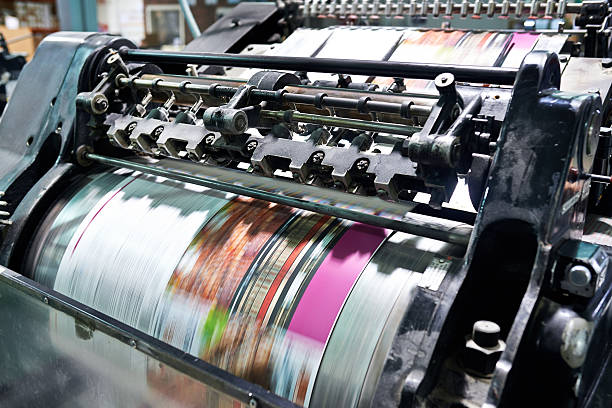
The commercial printing is not the same as that inkjet printer that resides on your office corner. We are discussing full scale production whereby we are using specialized equipment that has the ability to produce in large quantities and yet consistency in quality over thousands or even millions of prints.
Technology has taken an impressive turn within the last one decade. The commercial printers available today have made possible what was thought impossible a decade ago, it is the ability to produce variable data, applied finishes, sustainable materials, and the turnaround time has reduced to a matter of days.
The scope of commercial printing applications is underestimated in most businesses. In addition to the more apparent business cards and brochures, commercial printers also deal with packaging, point-of-sale displays, vehicle wraps, trade show materials, direct mail campaign, catalogs, annual report and customized promotional materials. The range is genuinely vast.
There are two options that can be used, and these are the choice between the offset and the digital printing.
This choice stalls a lot of entrepreneurs, and to be honest, it is not always so simple.
In offset printing, plates are used to print ink on paper, and it is cost-effective when a large grade is required, i.e. more than 1,000 items. The unit cost reduces drastically as the quantities increase. When you are printing brochures of 10,000 copies, then offset is certainly your best option. The color matching is also superb, and matching of the color with any particular brand can be done using Pantone.
Shorter runs have been overcome by digital printing, meanwhile. No plate arrangements, and therefore you can print 50 or 500 without crippling the wallet. Only under the influence of digital technology, it is possible to print variable data, i.e., each work may have its own information such as a personal name or a special offer.
Last year, I was engaged by one of the real estate agencies that required 200 customized property brochures on a high end property development. The brochures had various names of buyers and personalized neighborhood details. This was economically practical using digital printing; offset would have been prohibitively costly.
The Main Factors in the choice of a commercial printer.
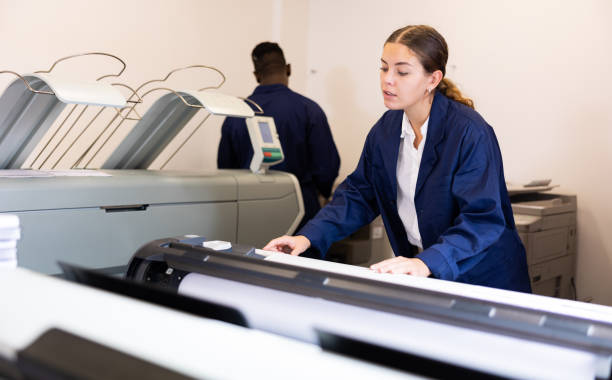
This is because the correct printing partner is more important than most businesses can imagine. It is like this that I seek after years of trial and error:
Your needs should be reflected in capabilities and equipment. A printing company that deals with packaging will not necessarily be good at printing your annual report. Inquire particularly on the nature of the projects that they undertake most.
Everything is in the sample quality. Take samples like what you require. Test them, check the colour of accuracy, the finishing. I have witnessed some of the beautiful online portfolios which did not correspond to the quality of output.
Responsiveness and communication will give you many headaches. Their responsiveness to questions is how fast they are? Do they provide clear proofs? Will they explain to you options?
Pricing transparency is a line between professional operations and problematic operations. Unseen costs of correcting files or shipping or rush order will bust your budget. Any project should be approved in a written form.
Getting the most out of Your Commercial Printing Investment.
Choice of paper has a drastic effect on the outcome. Thicker paper communicates quality, but adds expenses and postage of the mailed pieces. Photos and colors are made better on coated papers, uncoated ones are more organic and can be used on materials that people will write on.
Additional finishing options such as embossing, foil stamping, spot UV coating and die-cutting can make it possible to transform simple prints into a memorable work. Nevertheless, these methods increase the cost and time spent on production. Place them strategically on documents worth the investment like business cards that are of high quality, significant proposal or catalogs of flagship products.
There should be more attention to color management than the one it usually has. Make sure that your designer gives files in color mode CMYK with a proper bleed setting. Screen RGB files will not be reproduced correctly on paper and it will usually turn out to be a disappointment when colors do not appear as they are expected.
Commercial Printer sustainability.
Environmental issues have ceased to be nice-to-have to being a must to most businesses. Luckily, the industry has reacted profitably.
FSC certified paper, soy and vegetable-based ink and a waterless printing technology are now predominant. Printers are also providing carbon-neutral printing. When you are interested in sustainability as your brand (and more and more it becomes so) enquire about environmental certifications and practices of potential printers.
Common Mistakes to Avoid
Having considered thousands of print projects, some errors can be seen repeatedly.
There is costly reprinting that comes about due to ignoring proofing processes. In important jobs, physical evidences should always be demanded. Printed colors and screen colors vary, and in some cases significantly.
Turnaround times should not be underestimated as this causes unnecessary pressure. Complex work entailing special finish requires a proper production time. Create buffer on your timelines.
The decision to only select on price usually backfires. The lowest price often translates to the compromise of corners, either in the quality of the paper or the quality of its colors or service to the customer. Price is not important as value.
Commercial printing and the future.
Print is not dying it is changing. Combination with online campaigns with QR-codes, augmented reality features, and customization technologies are forming hybrid experiences which work better in all cases compared to either channel.
Those companies who are strategic in the use of commercial printing as an element of a unified marketing campaign are still enjoying high returns. The trick is being purposeful; to print the correct material at the correct quality and with the correct purposes.
Frequently Asked Questions
What is the minimum order of commercial printing?
The minimal quantity that most commercial printers will take up order is 250-500 pieces, but digital printing allows small quantities to be printed at a reasonable cost.
What is the average time of commercial printing?
Normal jobs take 5-10 working days. There are rush services which are more expensive. Complex finishing increases schedules.
What is the file format that I would need to give?
The industry standard is press-ready PDF with embedded fonts, 300 DPI images, CMYK colors and 0.125 bleed.
Is it cheaper to use commercial printing to print in-house?
Commercial printing is usually cheaper per unit and provides high quality when the number of pieces is above 100-200.
Is it possible to print on sustainable papers?
Absolutely. The majority of commercial printers provide recycled paper, FSC paper, and greener inks.
What is variable data printing?
Technology that enables customizing of individual items under a single print run- names, addresses, custom offers, and pictures.